
Osage Criminal History Checks
Begin with the office that made the Osage record. Osage Police keeps its incident and arrest reports. Mitchell County Jail creates a booking file when Osage police transport a person there. The Clerk of District Court keeps the filed Osage charge, hearings, rulings, and final outcome. Iowa DCI maintains a separate fingerprint-supported history, so one Osage search never replaces all the others.
A practical Osage criminal records search follows the event from its source:
- Contact Osage Police for the Osage incident or arrest narrative, using the date, place, report number, and requested format.
- Call Mitchell County Jail when the Osage question is present custody, booking, bond, release, or transfer.
- Search Iowa Courts Online for a filed Osage criminal case, then ask the clerk for documents or a certified copy.
- Use a focused Chapter 22 request when the needed Osage or jail material is not posted online.
- Request an Iowa DCI record check when a fingerprint-linked statewide Iowa history is the right product.
Three Osage Records Counters
Osage has an unusually compact records map. The Osage police counter is at 432 Main Street. The Mitchell County Clerk of District Court is at 212 South 5th Street, and the Osage-area sheriff and jail are next door at 211 South 6th Street. Close distance does not mean shared custody of Osage files. An Osage police report stays with Osage Police, a booking belongs to the jail, and an Osage prosecution belongs to the clerk.
The official Osage city site provides a useful view of the local government that directs residents to city services.

That Osage gateway is the right first stop for Osage municipal contacts, but it does not provide an Osage police blotter, jail list, or criminal case database.
| City | Osage, Iowa, the Mitchell County seat |
|---|---|
| 2020 Population | 3,627 residents |
| Police Record Holder | Osage Police Department |
| Booking Office | Mitchell County Sheriff and Jail |
| Trial Court | Iowa District Court in Mitchell County |
Records at the Osage Police Department
The Osage Public Safety Center houses Osage Police at 432 Main Street. Chief Brian Wright leads the Osage department. The Osage office phone is 641-732-3777, the fax is 641-732-4483, and the published email is osagepd@osagepd.org. Office hours are weekdays from 8:00 a.m. to 3:00 p.m. Osage publishes no dedicated report portal, report fee schedule, arrest blotter, or case search.
Ask Osage Police for an Osage-created incident or arrest report. Give the Osage date and approximate time, the location, the type of event, and an incident number if known. State whether an electronic or paper copy is preferred and ask for a cost estimate. Osage may redact protected victim, juvenile, investigative, medical, or personal information. A direct and narrow Osage request is easier for staff to identify than a request for every record tied to a broad name.
Osage Police Department
432 Main St.
Osage, IA 50461
641-732-3777
Weekdays, 8:00 a.m.–3:00 p.m.
Routing an Osage Records Request
Osage offers a general written-routing tool when a caller wants a written trail. The official Osage contact form asks for first and last name, phone, email, a comment or question, and a contact preference. It is not police-specific, so the message should say that the request concerns an Osage Police record and should identify the Osage event as closely as possible.
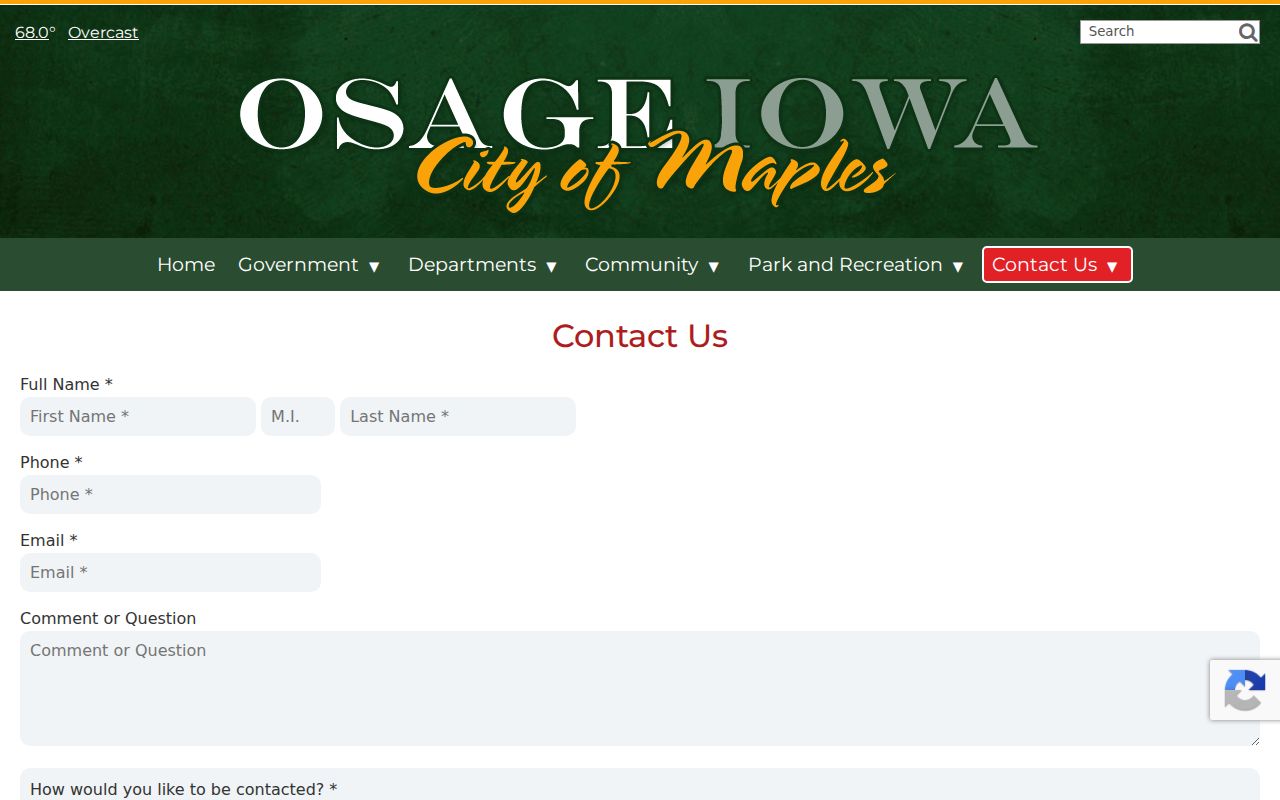
The Osage form can route a question, but it does not search Osage criminal records or promise a response time. For an urgent Osage custody question, call the jail instead. For an Osage report copy, use the police counter or phone and confirm whether the form is sufficient.
Useful Osage request details include the police record type, date, time range, street or location, incident number, and file format. Do not send a vague demand for a “background check.” Osage Police holds Osage event files, while the Iowa DCI provides the official statewide name-based record check.
Booking and Arrest Records in Osage
Osage Police may make the arrest, but a person lodged locally is booked at Mitchell County Jail. Jail staff create intake, charge, bond, custody, and release entries. The county has no official online roster or booking log, and no verified sheriff app supplies one. Call 641-732-4740, visit the sheriff counter at 211 South 6th Street, or request releasable booking fields under Iowa Chapter 22.
The police narrative does not move into the sheriff’s report files merely because the person was booked. Ask OPD for the incident or arrest account. Ask the jail for intake and custody data. Then use the Mitchell County arrest search routes when the question spans jail, court, and DCI records.
Arrest-stage charges are claims, not findings of guilt. The county attorney can file different charges, and the court may dismiss a charge or record another outcome. A present-custody call therefore answers a different question from a docket search.
Reading Osage Crime Data
For official crime statistics, filter the Iowa incident-based reporting system or the FBI Crime Data Explorer to Osage Police Department. Do not merge OPD figures with Mitchell County Sheriff totals. The agencies cover different beats and create separate series. The research did not verify a current Osage numeric extract, so a precise city rate would overstate what the official sources support.
Statistics also do not identify a person’s record. They show reported agency activity, not whether a named individual was arrested, charged, or convicted. Use the police, jail, and court channels for those questions. A missing statistical row has no bearing on whether a report exists.
Note: Mitchell County’s state coverage map reports 88 percent reporting coverage, so county totals can understate activity and should carry that warning.
When Osage Records Are Not Online
Osage has no city police report search, public arrest blotter, or municipal case portal. That absence calls for a verified fallback, not a commercial people search. For an OPD event, contact the police department and request the exact report. For a booking, call Mitchell County Jail. For a filed charge, search Iowa Courts Online and then ask the clerk for the document. Each step checks a real custodian.
A missing online result can have several causes. The event may be too recent for a court filing, the county attorney may not have filed a charge, the record may predate broad electronic coverage, or the file may be confidential. DCI can also return no releasable Iowa history even when another public local file exists. Its repository depends on fingerprints and dissemination rules, not merely a name appearing in a police report.
Keep the search narrow and log the office, date, and response. If staff cannot locate the record, verify spelling, aliases, exact birth date, incident location, and the agency that responded. Then move to the next custodian only when the event’s path supports it. This method avoids treating silence from one Osage channel as proof that no record exists anywhere.
The Osage Municipal Court File
Osage has no municipal court. Iowa’s 1973 unified-court reform abolished municipal, mayor, police, and justice-of-the-peace courts. State criminal charges from an Osage event proceed in Iowa District Court. Municipal infractions may be handled under Iowa Code section 364.22, and a city citation reaches Iowa Courts Online only if it is filed with the county clerk. City parking tickets usually stay outside that system.
| Court Name | Iowa District Court for Mitchell County, not an Osage municipal court |
|---|---|
| Case Types Heard | Filed Iowa felony, misdemeanor, nonscheduled traffic, OWI, and other criminal matters |
| Case Lookup Channel | Iowa Courts Online; clerk counter for older files, documents, and certified copies |
| What the Docket Shows | Case ID, parties, charges, filings, disposition, financial entries, and some bond data |
| Copies & Fees | Ask the Mitchell County clerk; no local copy fee was found in official published sources |
Osage Citations and Court Cases
A citation is not always a criminal case. The court interface separates case types such as simple misdemeanor, serious misdemeanor, aggravated misdemeanor, nonscheduled traffic, scheduled traffic, OWI, and felony. If a citation is filed with the clerk, allow as much as 14 days for it to post. Search by the official citation number or by the name and date-of-birth modes that the interface supports.
When nothing appears, check the spelling and remove extra spaces. The absence may reflect entry lag, a city parking matter that was never filed, a confidential case, or an older record. The clerk can address missing dockets, cases before broad electronic coverage began in 1998, public-terminal documents, and certification. The full Mitchell County court case lookup explains those county channels without treating a city ticket as a conviction.
How Osage Records Reach the County
One Osage event can create several records at different speeds. OPD writes the local narrative. If a person is lodged, the jail books the person and submits fingerprints when required. The county attorney decides what to file. The clerk opens the District Court case, and the final disposition is later reported to Iowa DCI.
Record flow: Osage Police Department › Mitchell County Jail and Iowa District Court › Iowa Department of Public Safety, Division of Criminal Investigation
An Osage police record may exist before any public court case. A booking can exist even when the prosecutor files a different charge or files none. DCI may lack an arrest cycle if no fingerprint card was submitted. That is why an Osage record check should match the source to the question instead of treating one “no result” as a clean history.
Osage Law Enforcement History
The city’s own history gives useful context for where local public-safety records come from. The official Osage history page and the city’s marshal-and-chief roster document the shift from city marshals to a modern police department. Brian Wright’s appointment as chief dates to July 1, 2012.
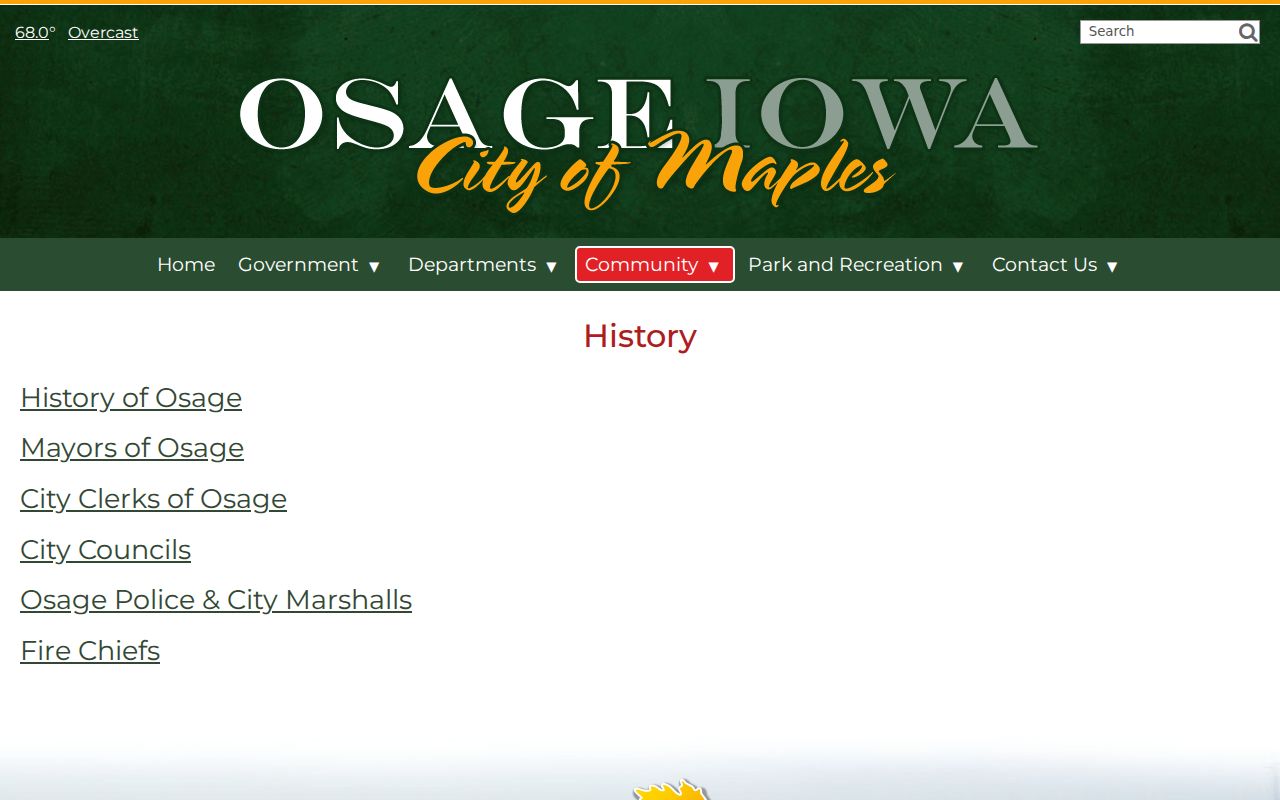
The historical material explains the local institution, but old police material is not the same as the District Court archive. Court holdings in Mitchell County reach back to the 1850s and are kept by the clerk. Researchers tracing an old offense should ask which office created the particular record.
Osage became the county seat after a long nineteenth-century contest with Mitchell. That history helps explain why current court and sheriff records converge in Osage, even while city police reports remain with OPD.
Osage Record Access Rules
Iowa’s open-records framework permits inspection and copying of public records, subject to specific limits. A request may be made in person, in writing, by phone, or electronically. Reasonable direct costs may apply, and the custodian should communicate costs. Police investigative details, confidential sources, juvenile material, victim data, and records protected by another law may be withheld or redacted.
If an investigative file is restricted, ask for segregable facts such as the date, time, exact location, and immediate circumstances. Court access follows Iowa law, court rules, and court orders. Expunged files, confidential juvenile cases, and unserved-warrant matters may not appear publicly.
Key Statutes:
Iowa Open Records Law, chapter 22 permits access to public records while preserving statutory exceptions.
Iowa Code chapter 692 controls criminal-history dissemination, subject review, and challenges.
Iowa Rules of Electronic Procedure chapter 16 governs public electronic court access.