
Mitchell County Criminal History Checks
Mitchell County does not run one county criminal-history database. Start with the official source that owns the record. Iowa Courts Online is the public discovery tool for a filed criminal case. The Mitchell County Clerk of District Court supplies old files, court-terminal documents, and certified copies. The sheriff or the police agency that made an arrest holds its report, while the jail holds intake and custody material. The Iowa Division of Criminal Investigation, or DCI, supplies the statewide identity-history product.
Gather the full name, exact date of birth, name variants, likely agency, date, and case or report number. A single name match is not enough. Compare the date, county, charge, and disposition before treating a result as the same person.
- Search Iowa Courts Online by name, date of birth, case ID, or citation and select Mitchell County when that search mode calls for a county.
- Open the blue Case ID and compare parties, charges, filings, dates, and disposition.
- Ask the Mitchell County clerk for a certified copy, a pre-1998 file, or a document that is not online.
- Call the arresting agency or jail for current custody and request the releasable report or booking fields.
- Order a DCI record check when an Iowa fingerprint-supported history, rather than one court file, is needed.
Mitchell County’s Three Record Systems
A court docket, a booking file, and a DCI rap sheet answer different questions. The booking file describes a local custody event and the arrest-stage accusation. The Mitchell County court file shows what the county attorney filed, how the case moved, and what the judge decided. DCI organizes fingerprint-supported Iowa arrest cycles with dispositions reported back by the courts. One event can therefore produce three records at three speeds.
The county government gateway gives the clearest starting point for local offices. The official Mitchell County website shows the office structure and contact routes used for local records.
The local gateway does not replace the state docket or DCI search. It identifies the Mitchell County custodian to contact when the statewide screen is incomplete.
Record flow: Arresting agency › jail booking › county attorney charge › Iowa District Court docket › disposition report to DCI.
Official Background Checks in Iowa
The Iowa DCI Records and Identification Unit is the central repository. Its Iowa Record Check Online product is a name-based check. First name, last name, and exact birth date are the minimum identifiers. Each last name or alias is a separate $15 request. A signed subject release is not mandatory, but it changes what DCI may disclose. Without it, completed deferred judgments and arrests more than 18 months old without a final disposition are withheld.
Online, mail, fax, email, and walk-in routes are available. DCI does not accept the request by phone, though staff answer process questions. Fieldprint serves some code-based Iowa programs, while a local ink-card service must be confirmed with the Mitchell County Sheriff. A person reviewing a federal identity history can use the FBI’s subject-only electronic or fingerprint-card process.
The Iowa Record Check Online portal is the official web channel for the DCI name-based product.
The portal result is an Iowa repository response, not a certified Mitchell County court file or a live jail roster.
| Official product | Core fee | Best use |
|---|---|---|
| Iowa DCI name check | $15 per last name or alias | Iowa fingerprint-supported repository history |
| Iowa Courts Online | Basic docket search is free | Filed court cases and outcomes |
| Mitchell sheriff or clerk copy | Ask the custodian for an estimate | Agency report, booking fields, or official court copy |
Two Mitchell County Record Counters
Mitchell County keeps the two main local record counters close but separate. The Clerk of District Court is at 212 S. 5th St. in Osage. It manages pleadings, evidence, orders, fines, judgments, and trial records. The sheriff and jail counter is next door at 211 S. 6th St. It handles sheriff reports, jail custody questions, and focused Chapter 22 requests. A caller should not expect the clerk to own a police narrative or the sheriff to certify a court judgment.
Mitchell County Clerk
212 S. 5th St., Osage, IA 50461
641-732-3726
Weekdays, 8:00 a.m. to 4:30 p.m.
Mitchell County Sheriff
211 S. 6th St., Osage, IA 50461-1228
641-732-4740
Weekdays, 8:00 a.m. to 4:30 p.m.
The Mitchell County Sheriff page confirms the jail and law-enforcement contact used as the local fallback.
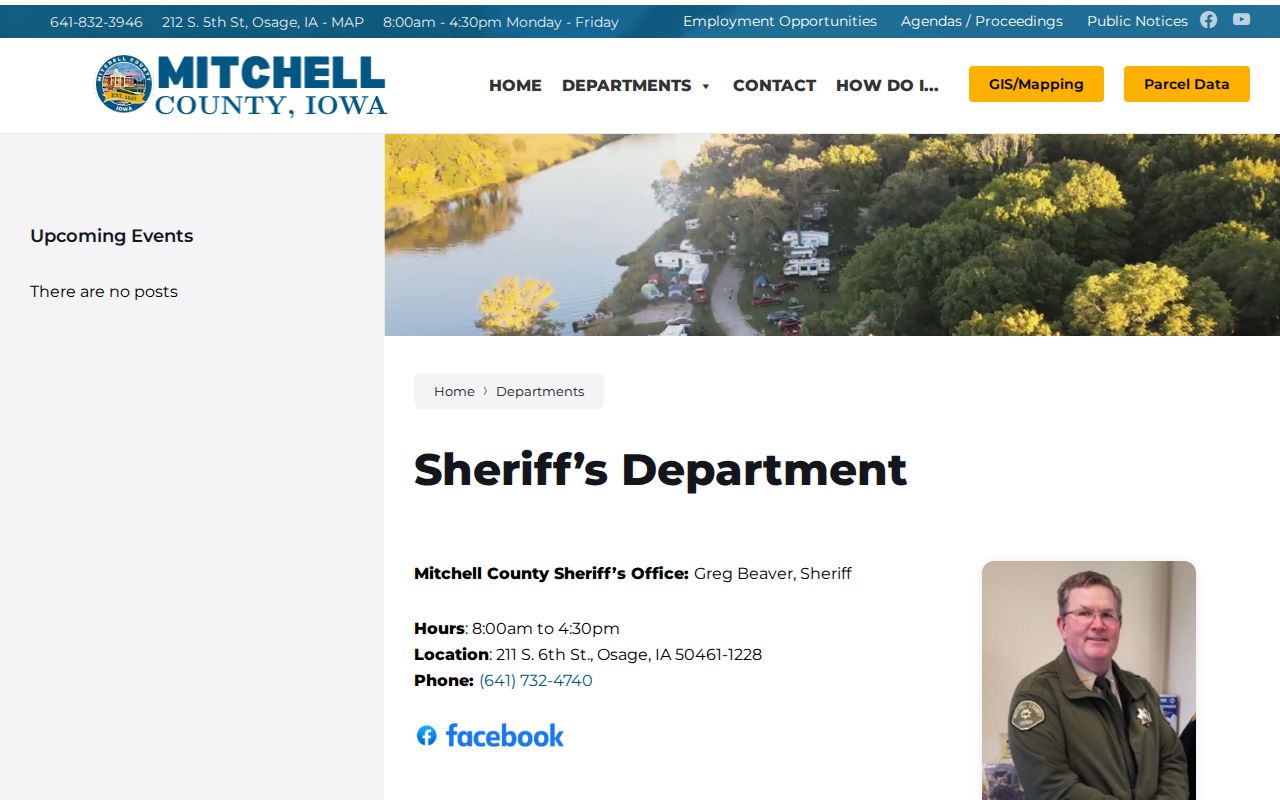
This office is the practical first call when no Mitchell County roster, warrant list, or booking portal is available.
Kinds of Criminal Records
Each Mitchell County record begins at a different stage. An incident report records what an officer saw or was told. A booking file tracks intake, custody, bond, and release. The criminal case file begins when a charge is filed. A DCI entry depends on submitted fingerprints and later disposition reporting. The source matters because a booking charge can change before the prosecutor files a case.
- Arrest and booking records: held by the arresting agency and Mitchell County Jail, subject to Iowa confidentiality rules.
- Court case records: held by the Mitchell County Clerk and indexed through Iowa Courts Online.
- Repository records: held by Iowa DCI and built from fingerprint-supported arrest cycles.
- Custody and supervision records: held by the jail, Iowa Department of Corrections, or federal Bureau of Prisons.
- Registry records: registered locally by sheriffs and maintained statewide by DCI.
Warrants need special care. Mitchell County has no public active-warrant list, and Iowa has no public statewide warrant portal. An online absence is not clearance because an unserved warrant case can remain confidential.
Mitchell County Court Search Fields
Iowa Courts Online covers public trial cases after 1998 and some earlier files. The screen supports name, exact date of birth, case ID, and citation routes. A new case can take one business day to appear. Once posted, data can update in real time, although document entry may take several days. A citation may take longer. For old or missing Mitchell County records, call the clerk instead of changing the spelling until a false match appears.
| Field | Required | Mitchell County search note |
|---|---|---|
| Last or firm name | Yes for name mode | Use at least two letters; a percent sign can work as a wildcard. |
| First name | No | Do not add a period after an initial. |
| Date of birth | Yes for DOB mode | Use the exact date with first and last name. |
| County | Yes for Case ID mode | Select Mitchell. |
| Case type | Yes for Case ID mode | Codes include FE, AG, SR, SM, OW, and CR. |
| Citation number | Yes for citation mode | Enter the official number as printed. |
The Iowa Courts Online interface is the official Mitchell County docket search. The state screen helps locate a file, but the Mitchell County clerk remains the source for certification and courthouse-terminal documents.
Mitchell County Criminal Records: What They Contain
An Iowa criminal-history result may list identity data, arresting agency, arrest date, charges, court outcomes, and custody information. A Mitchell County court docket can go deeper into one prosecution. It may show the Case ID, case type, parties, lawyer, judge, counts, charge codes, filings, hearings, disposition, fines, restitution, bond, and service returns. Not every field is public in every case.
| Name and identifiers | Names, roles, date-linked identity information, and counsel on the court side. |
|---|---|
| Arrest and booking | Agency, date, basis, charge, bond, custody, and release fields when releasable. |
| Charges and statutes | Each filed count, Iowa code, description, and charge status. |
| Disposition | Conviction, dismissal, acquittal, deferred judgment, or another recorded outcome. |
| Sentence | Custody, supervision, fine, costs, restitution, and payment entries. |
| Access limit | Juvenile, sealed, expunged, and unserved-warrant content can be hidden. |
Mitchell County Jail Record Fallback
No official Mitchell County inmate roster, booking log, sheriff app, or public booking-profile search was found. That is a real access limit, not a reason to use a commercial jail directory. Call the jail, visit the counter, or file a focused Iowa Chapter 22 request. Ask for the date, time, location, arresting agency, report or booking number, releasable charge, bond, custody, and release fields. Then use the court docket to see whether a charge was filed.
The county’s 2025 board record discussed replacing the jail’s aging analog camera system, and an April 2026 proceeding noted open jailer-captain and deputy positions. Those facts confirm current custody operations but do not establish a roster, capacity, delay, or safety condition. Mitchell County Alerts is an emergency notification service, not a jail or warrant search.
Once a person reaches state custody or supervision, use Iowa DOC. The Iowa DOC open-records request page explains the Chapter 22 route for corrections files.
Public corrections fields are limited by law, while case notes and presentence reports remain confidential.
Iowa Public Access Laws
Iowa’s public-records law permits inspection and copying unless another law, court rule, or order makes the material confidential. For a Mitchell County sheriff request, a person may ask in person, in writing, by phone, or electronically. Reasonable direct costs may apply. The custodian should communicate costs, and a focused request makes review and segregation easier.
Key Iowa rules:
Iowa Code chapter 22 grants access to public records while preserving listed exceptions.
Iowa Code chapter 692 controls DCI criminal-history dissemination and review.
Electronic Procedure rule 16.501 and following govern public electronic court access.
Iowa Code chapter 901C sets the state expungement paths for qualifying cases.
Investigative files, confidential juvenile records, protected victim data, and unserved warrants can be withheld. A requester can still ask for segregable facts such as the date, time, exact place, and immediate circumstances when Iowa law permits their release.
Mitchell County Fingerprints and DCI Records
DCI states that every Iowa repository record begins with a submitted fingerprint card. If an arrest does not produce a card that reaches DCI, that arrest cycle may not appear in the repository. After the Mitchell County court resolves the charge, the disposition must also reach and match the state identity record. Missing prints, unmatched identity data, or reporting lag can make the court and DCI screens disagree.
The DCI record-check options page sets out online and form-based channels.
A person who finds an error can contact DCI with the item and proof. DCI may ask for fingerprints to confirm identity before issuing a correction report.
Note: “No Iowa Criminal History Found with DCI” can also mean data exists but cannot be released under the request’s authorization.
Restricted, Sealed & Expunged Records
Mitchell County juvenile court and agency files are generally confidential. Unserved warrant matters may also stay hidden until service. Iowa Code chapter 901C provides relief for qualifying acquittals and dismissals after its conditions are met. A narrow misdemeanor-conviction process may apply after more than eight years, with no pending charges and all obligations paid, but many offenses are excluded and relief is generally once in a lifetime.
A completed deferred judgment follows a different rule. The court matter may be expunged while the discharged deferred judgment remains as non-conviction information in DCI data. An ordinary requester needs the subject’s signed authorization before DCI releases that item. Anyone checking a personal record after Mitchell County expungement should verify both the clerk’s case and DCI’s repository response.
- Dismissal
- A filed charge ends without a conviction on that count.
- Deferred judgment
- Judgment is held back during probation and may be discharged under Iowa law.
- Expungement
- A statutory process that makes qualifying records confidential and may remove covered DCI conviction data.
- Disposition
- The court-recorded result, such as conviction, dismissal, or acquittal.
Mitchell County Supervision Records
Probation and parole are not run by a Mitchell County department. Iowa DOC’s Second Judicial District serves the county, with a probation and parole office in Mason City. The public offender search can show permitted custody or supervision data. The sentence and any revocation action remain in the Mitchell County court docket. For a record that is not in the locator, a person can contact the district office or use the DOC open-records route.
The Iowa Board of Parole is the state parole authority.
Board action and field supervision are distinct. Iowa DOC community-based corrections carries out local supervision.
The Second Judicial District corrections page identifies the district serving Mitchell County.
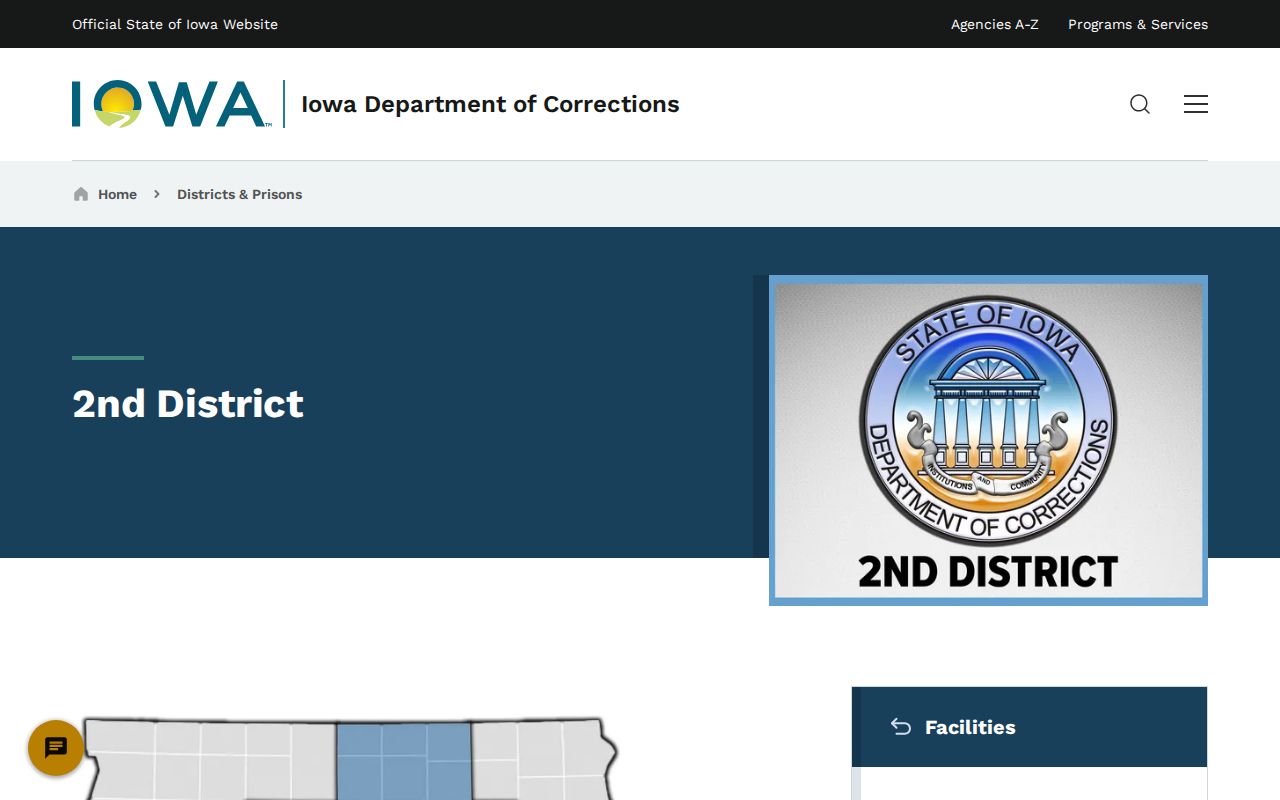
Public fields may include status, non-home location, supervision term, offense, and county of commitment. Case notes and sensitive service records are restricted.
Why Mitchell County Records Settled in Osage
Mitchell County organized in 1854, but the location of its records was not settled at once. A commission chose Mitchell as county seat in 1855. A disputed vote selected Osage the next year. Although the first phase of the Osage courthouse was done by 1860, records apparently stayed in Mitchell while the fight continued. The Osage building even housed attorneys and Cedar Valley Seminary during the dispute. Osage prevailed in 1870.
That history explains today’s records geography. Court files remain centered at the Osage courthouse, and sheriff and jail records are kept next door. State and federal layers sit elsewhere. The Federal Bureau of Prisons Inmate Locator is the official search when a Mitchell County inquiry turns into federal custody.
Federal court cases for Mitchell County fall in the Northern District of Iowa and are searched through PACER, not Iowa Courts Online.
City-by-City Criminal Records in Mitchell County
Local record paths change with the responding agency. Osage and St. Ansgar have police departments whose reports stay with those departments even if the person is booked at the Mitchell County Jail. Riceville crosses the Mitchell and Howard county line and contracts with the Howard County Sheriff, so the incident location can change the sheriff, jail, and clerk involved. Iowa’s unified court system means none of the three has a municipal criminal court.
Osage Record Check
Population 3,627 · Osage Police, Mitchell County Jail, and District Court routes.
St. Ansgar Record Check
Population 1,160 · Police and City Hall share the local records address.
Riceville Record Check
Population 806 · The county line and Howard Sheriff contract shape the route.